
Start by choosing one form of care that meets a real need, then give it a small, specific place in the day. You do not need a long routine to begin. You need something useful that fits the time and support you actually have.
When your days are crowded, self care can sound like another thing you are failing to fit in. It can also get confused with an ideal morning, a full free afternoon, or a list of products you need to buy. Your needs can be much more ordinary than that.
Ask what kind of care is missing
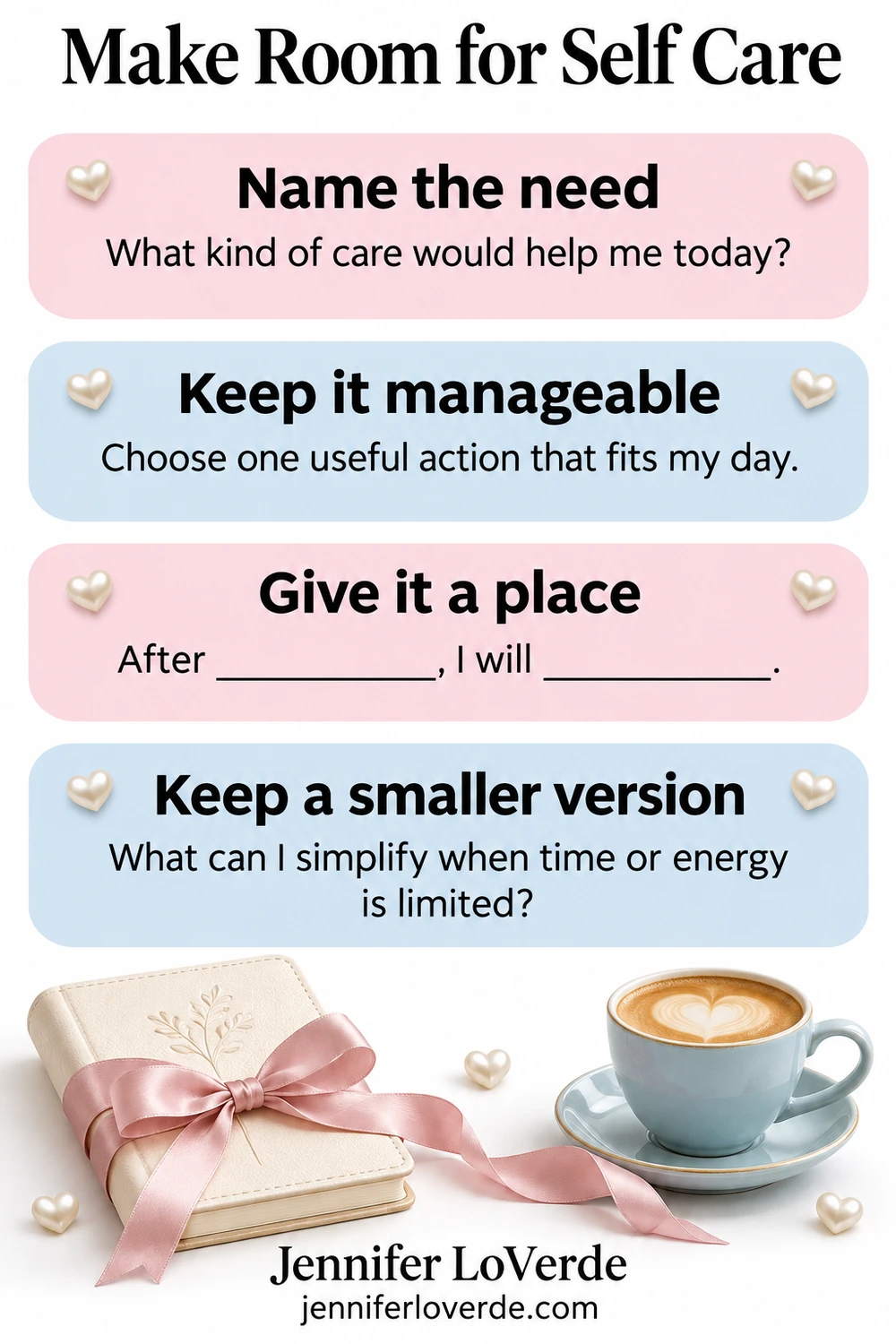
Do you need a proper meal, a quiet pause, time to wash and get ready, a conversation, or help with a practical task? Choose the need before choosing the activity.
For example, a journal page may be useful when you want to sort your thoughts. If you are hungry and have not had a chance to eat, making room for food may be the more useful choice right now.
Look for a small place in your real schedule
Notice where a few minutes might be available without pretending your responsibilities disappear. It could be after getting home, during a break, or before starting the next household task.
Give the action a clear cue: “After I put my bag down, I will sit for five minutes before beginning dinner.” A specific place can make care easier to remember than “I should take better care of myself.”
The small version should support you, not become another test to pass. If five minutes is all you have today, you do not need to dismiss it because you wanted twenty.
Make the setup easier
Put the item you need where you will use it. Keep a book by your chair, place your personal care supplies together, or prepare something simple for tomorrow’s break.
You can also remove a step. If choosing among ten activities makes you delay, keep two options: one for more energy and one for less. The aim is to reduce the decisions between noticing a need and responding to it.
Make room by changing something else
Sometimes there is no hidden pocket of spare time. You may need to simplify a task, let something wait, share a responsibility, or say no to an extra commitment.
Try making a specific request: “Could you handle the dishes tonight so I can have some time to myself?” A clear request gives another person a better chance to understand the help you need.
Not every request will be possible, and not every day will have the same flexibility. Work with the choices available instead of using someone else’s routine as your standard.
Keep a smaller routine for difficult days
Choose two or three steps that feel useful, then decide what you would keep if time or energy were limited. You might shorten the activity, use fewer steps, or move it to a different time.
Missing a day does not mean you need a more ambitious routine. You can return to the smallest version that still meets a need.
Try one care appointment today
Write: “Today I need ___, and I will make room for ___ after ___.” Keep the action realistic enough that you do not need an unusually easy day to attempt it.
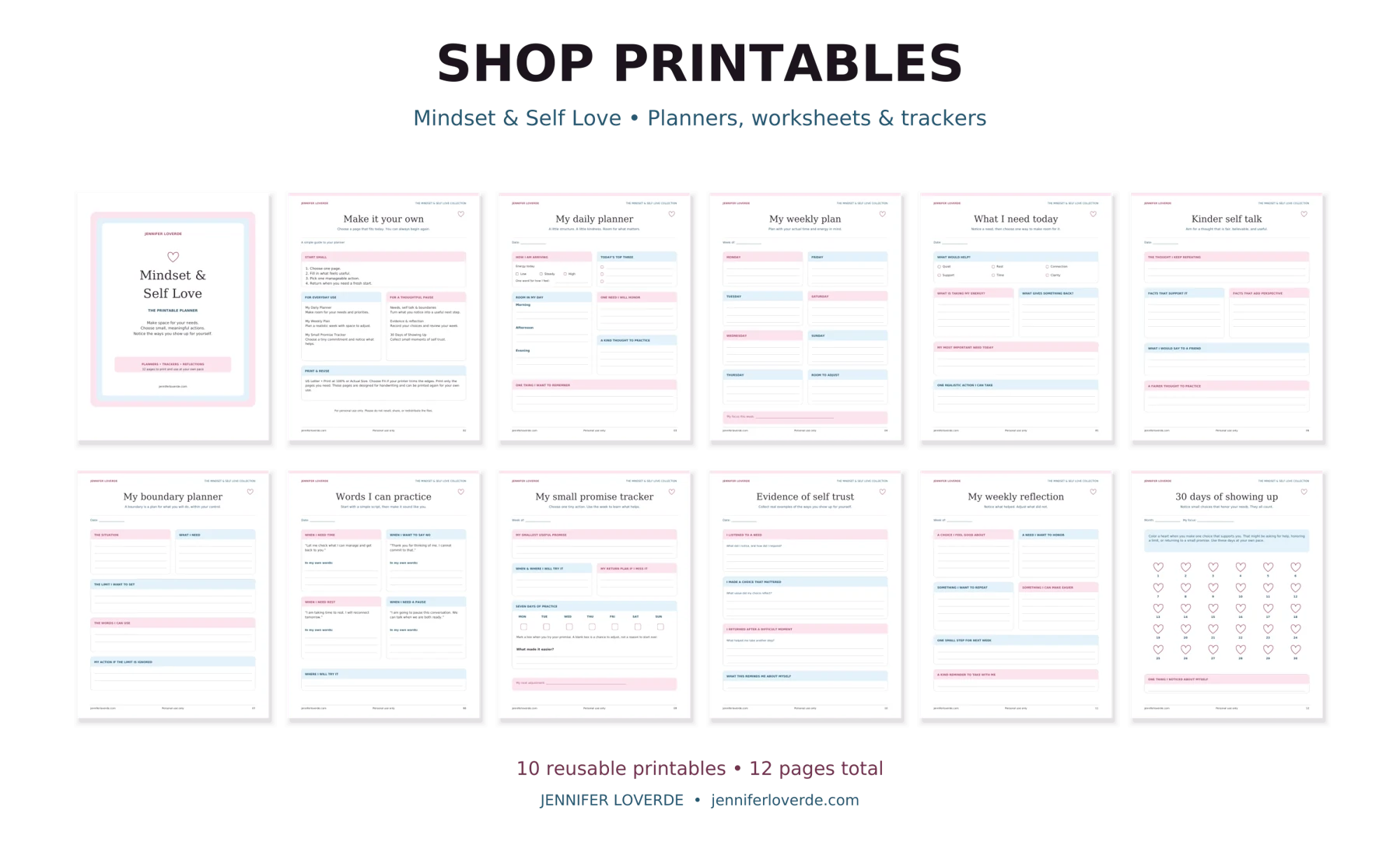
The Self Care & Routines printables include flexible routine pages, a care menu, and a weekly plan to help you make that space.

Leave a Reply