

You notice what everyone else needs, adjust your plans, and say yes before checking your calendar. Later, your own priorities end up squeezed into whatever time remains.
Putting yourself first can begin with including your needs in decisions that affect you. You can care about other people while giving your time, preferences, and limits a place in the conversation.
You do not need a dramatic announcement or a completely different personality. Start with one ordinary situation where you want to make a more intentional choice.
Ask what you need before you answer
When someone makes a request, notice your first reaction. Are you happy to help, unsure whether you have time, or already trying to work out how to cancel something important to you?
Give yourself permission to check. A simple “Let me look at my plans and get back to you” can create room for a thoughtful answer.
You can pause before agreeing to something. When a response is time sensitive, be clear about when you will reply.
Choose one priority that belongs to you
It can be hard to protect your time if you have not named what you want it for. Pick something specific that matters to you this week.
That might be keeping an appointment, working on a personal project, having a quiet evening, or seeing a friend. It does not have to be useful to someone else to belong on your calendar.
Make the plan realistic alongside your responsibilities. The aim is to give your priority an actual place, rather than assuming you will find time after everything else.
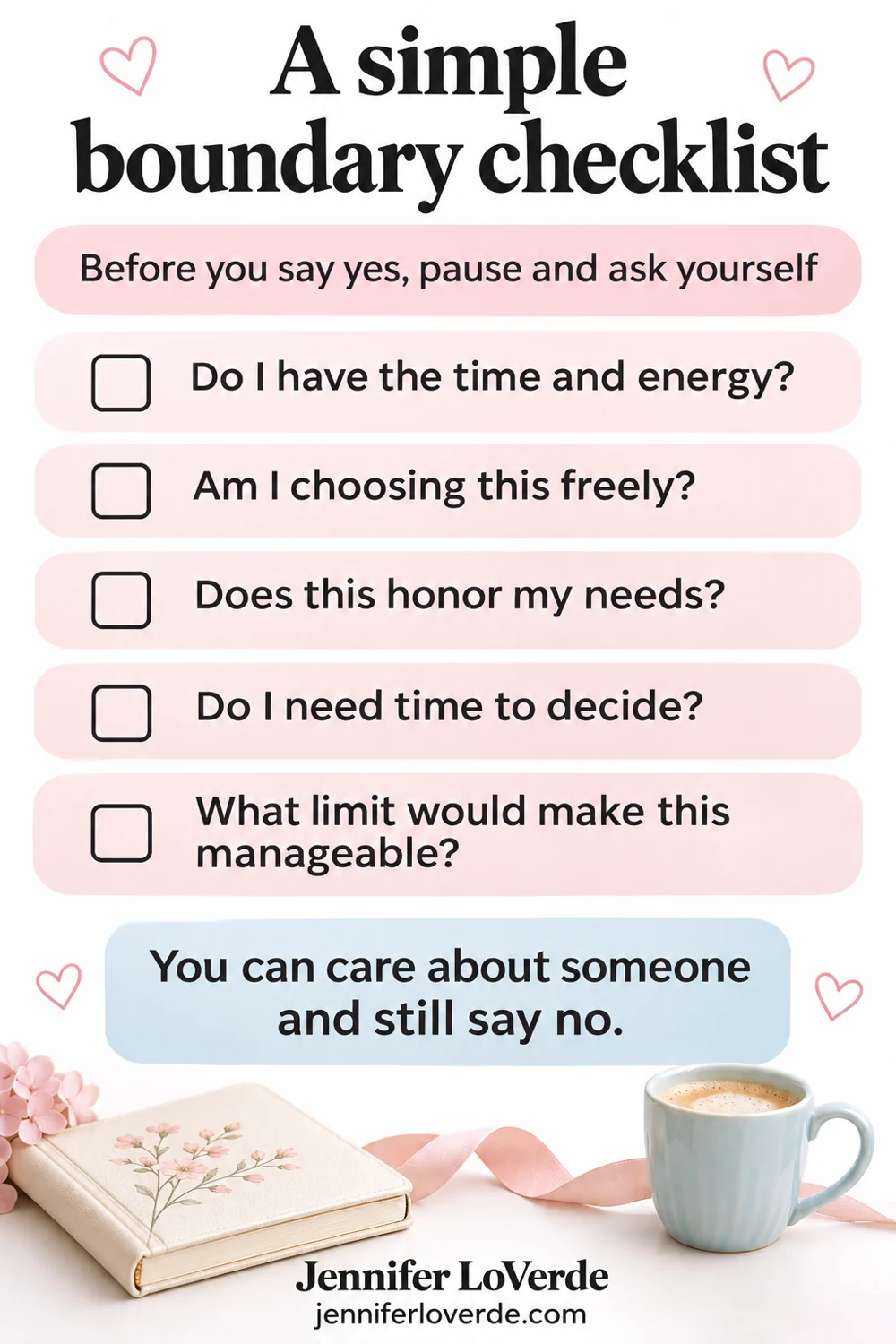
Use a clear, respectful boundary
A boundary can explain what you are available to do. It is often more useful to state that clearly than to hope someone notices you are stretched thin.
Try “I cannot make it tonight” or “I can help for half an hour, but I need to leave at six.” If you want to suggest another option, choose one you can genuinely offer.
You can be warm and direct in the same sentence. You do not need to make up an excuse to express a reasonable limit.
Some situations need more explanation or coordination, especially when you share responsibilities. Give the information needed to make a workable plan without promising more than you can manage.
Allow room for someone else’s reaction
A person may be disappointed when your answer changes their plans. That reaction can feel uncomfortable, particularly if you usually try to keep everyone happy.
You can acknowledge the inconvenience and still keep a thoughtful decision. For example: “I understand you were hoping I could come. I am still going to keep tonight free.”
If you realize you have overlooked a genuine responsibility, adjust the plan. Putting your needs in the picture also leaves room for fairness and honest discussion.
Practice in an ordinary moment
Start where the stakes feel manageable. State which restaurant you prefer, take the break you planned, or decline an optional commitment that does not fit your week.
Afterward, notice what happened. Did you communicate clearly, follow through, or discover a part of the conversation you want to handle differently next time?
You can learn from an awkward attempt without deciding you should go back to saying yes automatically. Clear communication takes practice.
Keep one small promise to yourself
Choose a commitment you control and can realistically keep today. It could be spending fifteen minutes on your blog or leaving enough time to get ready without rushing.
Your own plans deserve consideration before you give their time away. When something unexpected comes up, make the change consciously and decide when you will return to what matters to you.
For this week, choose one priority to protect and one phrase you can use when you need time to decide. You can begin putting yourself first through small choices that let your needs count, too.
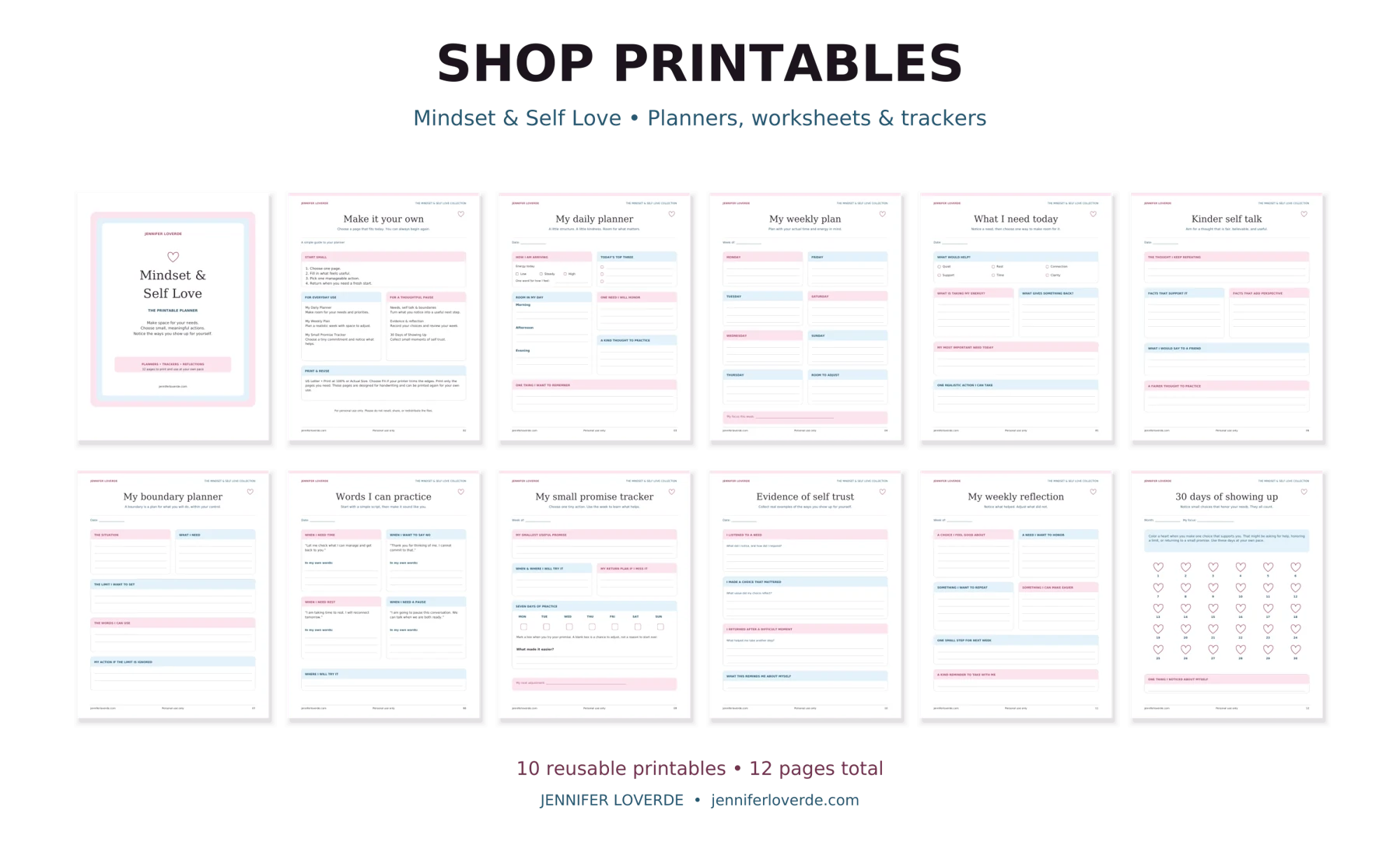
If you would like a place to practice these small choices, my Mindset & Self Love Printable Planner Bundle includes needs check ins, boundary planning, and self trust pages you can print and use at your own pace.

Leave a Reply