

You finally sit down, but your mind immediately starts listing everything you could be doing. The laundry is waiting, someone needs a reply, and relaxing somehow feels irresponsible.
You can make room for rest even while you are learning to feel comfortable with it. Waiting until every task is finished may leave you with very few chances to pause.
The starting point is to look at what the guilt is telling you, decide what truly needs your attention, and allow a realistic break. You do not have to resolve every feeling before taking one.
Name the rule behind the guilt
When you notice yourself feeling guilty, finish this sentence: “If I rest right now, it means…” Your answer might be that you are lazy, letting someone down, or wasting time.
Treat the answer as a thought to examine. Where did that expectation come from, and would you apply the same rule to someone you care about?
You might notice that you expect yourself to stay useful every minute. Naming that expectation gives you a chance to decide whether it is one you want to keep.
Separate what is urgent from what is unfinished
Some responsibilities need immediate attention. Others can wait, be simplified, or be shared.
Before a break, identify anything with a real consequence if it waits. An essential caregiving task needs a different plan from reorganizing a drawer.
An unfinished task does not automatically make rest the wrong choice. If something can reasonably wait, write down when you will return to it instead of repeatedly debating it.
When your responsibilities leave little flexibility, start with the space you actually have. That might mean asking someone to cover a task or taking a few quiet minutes between commitments.
Choose a pause that meets your needs
Rest can look like sitting outside with your coffee, listening to music, reading for pleasure, or spending a few minutes without another demand. It does not have to look impressive.
Ask yourself what you want less of for a moment. If you have been talking all day, quiet may feel welcome; if you have been alone at a screen, a relaxed conversation may be what you prefer.
Notice how you feel afterward without expecting a dramatic change. You are learning what kinds of breaks fit you.
Give yourself a clear stopping point
If sitting down feels difficult, choose a manageable window. You might decide to pause for ten minutes after lunch or leave one evening task until tomorrow.
Write the next task down before you stop if that helps you leave it alone. When your thoughts return to it, remind yourself that you have already made a plan.
A timer is optional. Use one if it helps you relax, and leave it out if it turns the whole break into a countdown.
Try a kinder response when guilt shows up
You might tell yourself, “I have things to do, and I am choosing a short break before I continue.” That acknowledges your responsibilities without turning them into a reason to keep going indefinitely.
Another option is, “I would not ask someone I love to earn every moment of rest.” Choose words that feel believable to you.
Feeling guilty is not a requirement to cancel your break. You can notice the feeling and still follow the reasonable decision you made.
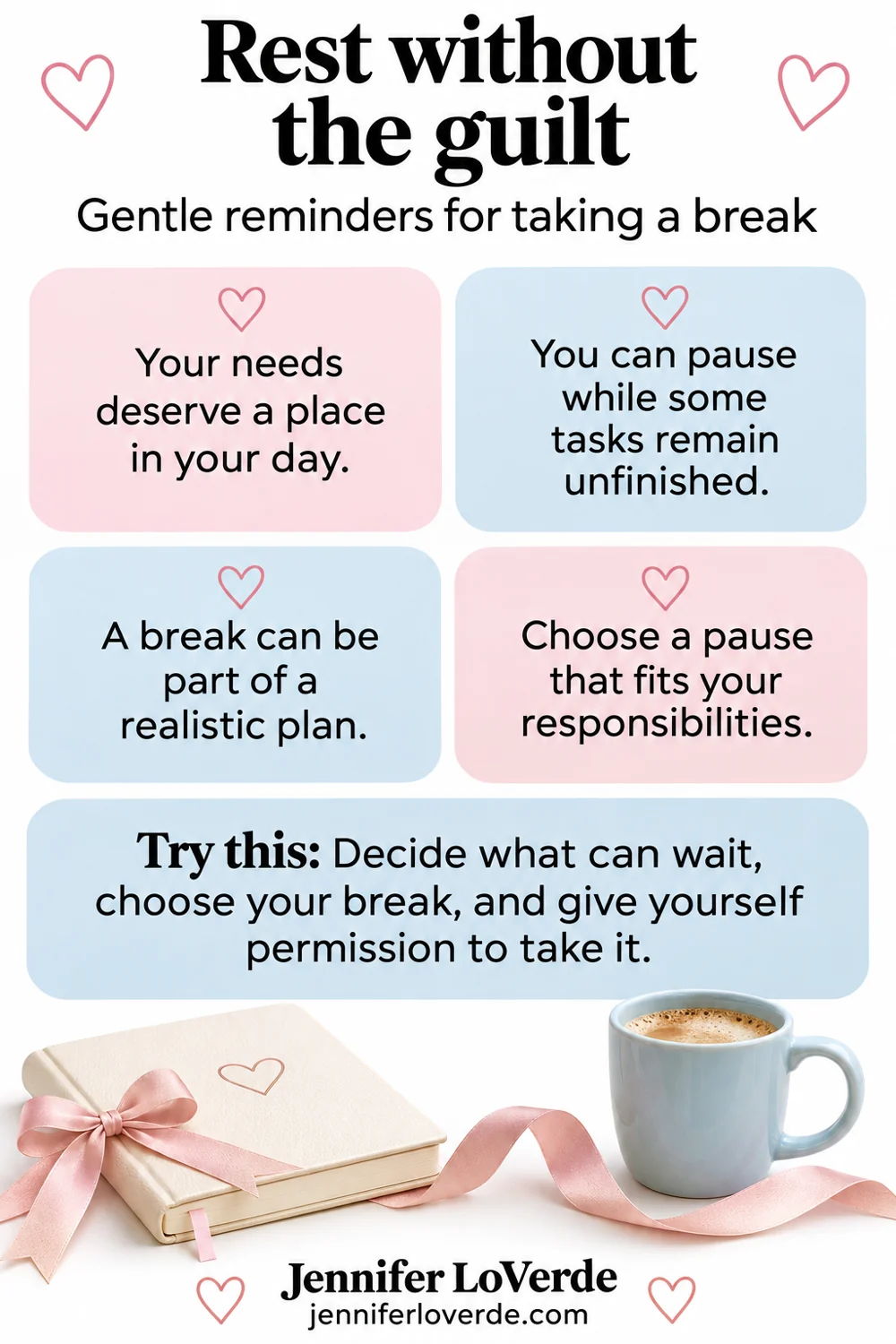
Make room for rest in the plan
Look at tomorrow before it fills up. Is there one small pocket of time you can leave open rather than immediately assigning another task?
Protecting that space may mean doing something more simply, asking for help, or accepting that a nonessential chore will remain unfinished. Choose the tradeoff intentionally.
For today, pick one realistic pause and let it be enough. You do not have to turn resting into another skill you must perform perfectly.
If you want to make a little more room for rest and care, my Self Care & Routines Printable Bundle includes a rest planner, flexible routine pages, and a weekly care plan you can use at your own pace.

Leave a Reply