

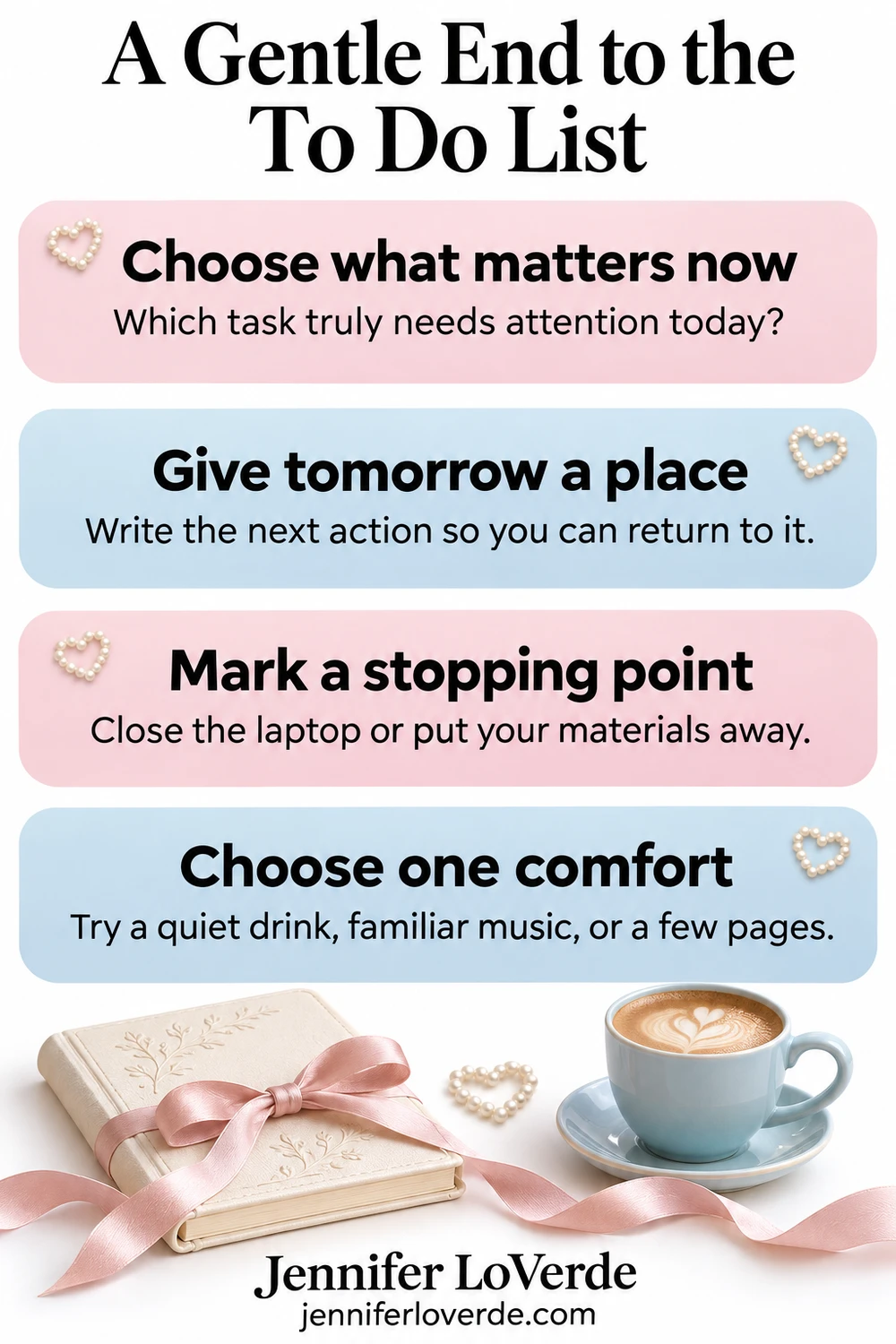
When your list keeps growing, it helps to give the day a stopping point that does not depend on finishing everything. Choose what needs attention now, record what can wait, and make a clear transition out of task mode.
There may always be another message, load of laundry, or thing you could organize. If rest only becomes available when the list is empty, you may find yourself checking for work long after you intended to stop.
Separate urgent from unfinished
An unfinished task can feel pressing simply because you keep thinking about it. Ask, “What would actually happen if this waited until tomorrow?”
Some things need timely attention. Others are uncomfortable to leave open but do not need action tonight. Make that distinction one task at a time instead of treating the entire list as equally urgent.
If a deadline is real, decide what must be completed and what can be reduced, moved, or shared. A concrete choice is more useful than trying to carry every possibility in your head.
Give tomorrow’s tasks somewhere to land
Before you stop, write a short list for the next day. Include the next action, not just the name of the problem. “Find the invoice email” is easier to return to than “Sort out everything.”
Choose a few priorities rather than moving the whole list into tomorrow and calling every item essential. You can keep a separate place for things that matter but do not need immediate attention.
You do not have to keep rehearsing a task to remember that it matters. A written note can hold the reminder while you turn your attention elsewhere.
Create a simple closing signal
Try closing your laptop, clearing one small surface, or putting work materials out of sight. Pick something that tells you the active part of the day is ending.
This does not need to become another elaborate routine. Even saying, “I have chosen what I am doing today,” can mark a decision you want to respect.
Choose rest that fits the moment
Unwinding does not have to mean feeling instantly peaceful. You might sit with a drink, listen to familiar music, read a few pages, or talk with someone you enjoy.
Ask what would feel manageable rather than what an ideal evening should look like. If you are tired, preparing an elaborate relaxing activity may be less helpful than sitting down for a quiet few minutes.
Expect the list to come back to mind
You may remember another task after you stop. Write it down if needed, then return to what you chose to do. Remembering something does not automatically mean you must act on it immediately.
If your workload regularly leaves no realistic room to stop, the next step may involve reducing commitments or asking for practical help. A calming activity cannot create time that your schedule does not allow.
Try a short closing note tonight
Write three lines: “What I handled today,” “What can wait,” and “Where I will begin next.” Then choose one comfortable thing to do for yourself.
The Stress & Finding Calm printables include worry sorting and thought release pages if you would like somewhere to put that closing note.

Leave a Reply