

One missed day can turn into giving up when you treat an interruption as proof that the whole effort failed. A more useful response is to make returning part of the habit: decide on a small next action and a realistic opportunity to try it.
You might practice for several days, miss once, and feel as if the progress no longer counts. The missing check mark becomes louder than everything you did before it. But a tracker records attempts. It does not decide whether you are capable of continuing.
Notice the rule you attached to the habit
Ask yourself what missing a day means in your mind. Does it mean you are lazy, unreliable, or back at the beginning? Those conclusions add a lot of weight to one event.
Try describing what happened without a character judgment: “I did not practice yesterday.” That statement leaves you free to look at the circumstances and decide what happens next.
Check whether the plan fits your life
A missed day may simply be an interruption. Repeated misses can also tell you that the habit is too large, the timing is awkward, or the cue is easy to overlook.
If you planned to read for thirty minutes at the end of an exhausting day, the problem may be the plan. You could try five minutes after lunch or one page before putting your phone on charge.
Adjusting a habit is part of practicing it. You do not need to keep a difficult setup just because it was the first one you chose.
Give yourself a return version
Choose a small version you can use when you feel resistant or short on time. For reading, that might be one page. For organizing, it might be putting away three items.
The small version should still connect to the action you want to practice. It is a way to begin again without requiring an unusually energetic day.
You can do more if you want to. You can also stop after the small version and let that attempt count.
Name the next opportunity
“I will get back to it soon” leaves another decision waiting for later. “After breakfast tomorrow, I will read one page at the table” gives your return a clear place.
Choose the next opportunity that fits your schedule. If tomorrow is unusually full, pick another specific time instead of promising something you already expect to miss.
Keep the tracker useful
You can leave a missed date blank and continue on the next date. You can also write a short note about what got in the way if that helps you make an adjustment.
Avoid inventing extra work to make up for a blank square. Doing twice as much tomorrow is not required to earn your place back in the habit.
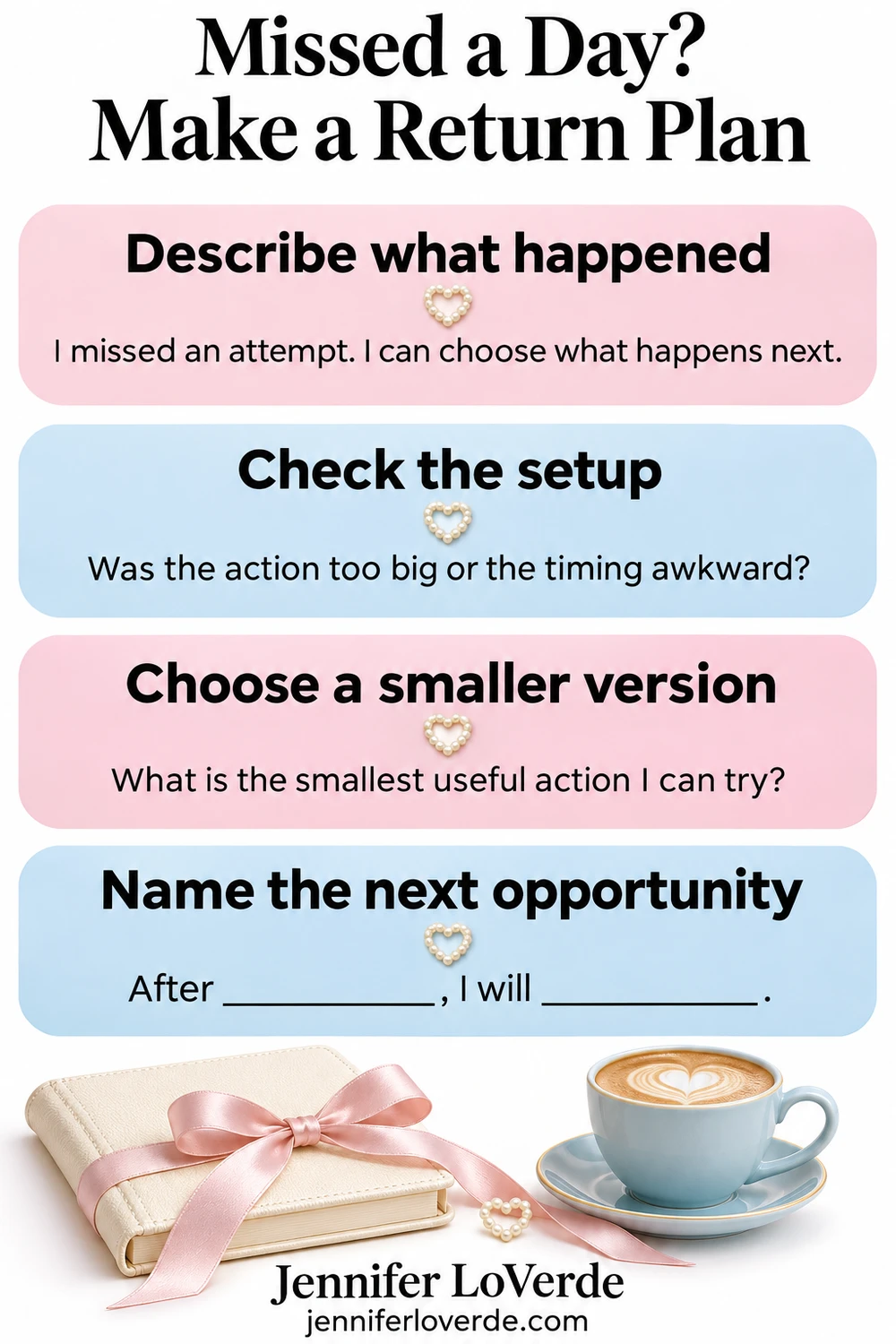
Try this before starting over
Write one sentence: “My next attempt will be ___, after ___.” Make the action small and the cue clear. Then return to your existing tracker instead of waiting for a perfect new week or month.
The Habits & Consistency tracker bundle offers daily, weekly, and monthly views so you can choose a format that helps you keep practicing.

Leave a Reply