
Build an evening routine around a short sequence you can use at different times, then make a smaller version for nights when you have less room. Your routine can begin when you finish your main responsibilities or arrive home instead of depending on one exact hour.
Choose a flexible order and a realistic starting point before choosing a perfect schedule.
A changing work shift, a class, family responsibilities, or an appointment can make a fixed evening plan difficult to follow. That does not mean you cannot have familiar ways to care for yourself at the end of the day.
The aim is to reduce repeated decisions and make your evening a little easier to manage. You can start with a few useful actions and adjust them as you learn what fits.
Decide what you need the routine to do
Before writing a list, ask which part of your evening currently feels difficult. Are you searching for your belongings the next morning, forgetting basic care until you are exhausted, or spending your available time deciding what to do?
Choose one problem to address first. A routine built around an actual need is easier to evaluate than a list collected from several other people’s evenings.
For example, if mornings feel rushed, preparing your bag might be useful. If you regularly sit down and find it hard to begin basic care later, moving that care earlier may help.
You do not need to solve every problem with the same routine. A few purposeful actions can give you a starting structure without filling your entire night.
Ask what would make tomorrow or tonight easier, then choose actions that serve that purpose.
Leave out anything you are adding only because it seems like something an organized person would do.
Choose a starting event that actually happens
A plan such as “begin at eight” depends on being available at eight. If your evenings vary, choose an event that remains part of the day even when the time changes.
That event might be arriving home, finishing dinner, or ending your last planned task. Choose whichever is most dependable and leaves a realistic opportunity for the next action.
Write the connection in plain language. “When I finish dinner, I will check what I need for tomorrow” is easier to picture than “I will get my life together in the evening.”
If your starting event often happens too late or while you are caring for someone, choose another. The purpose is to make the routine available, not to attach it to the most attractive sounding part of your day.
You can also use different starting events for different shifts while keeping the same short sequence afterward. Flexibility is useful when it reflects how your week actually works.
Pick a short sequence with a clear ending
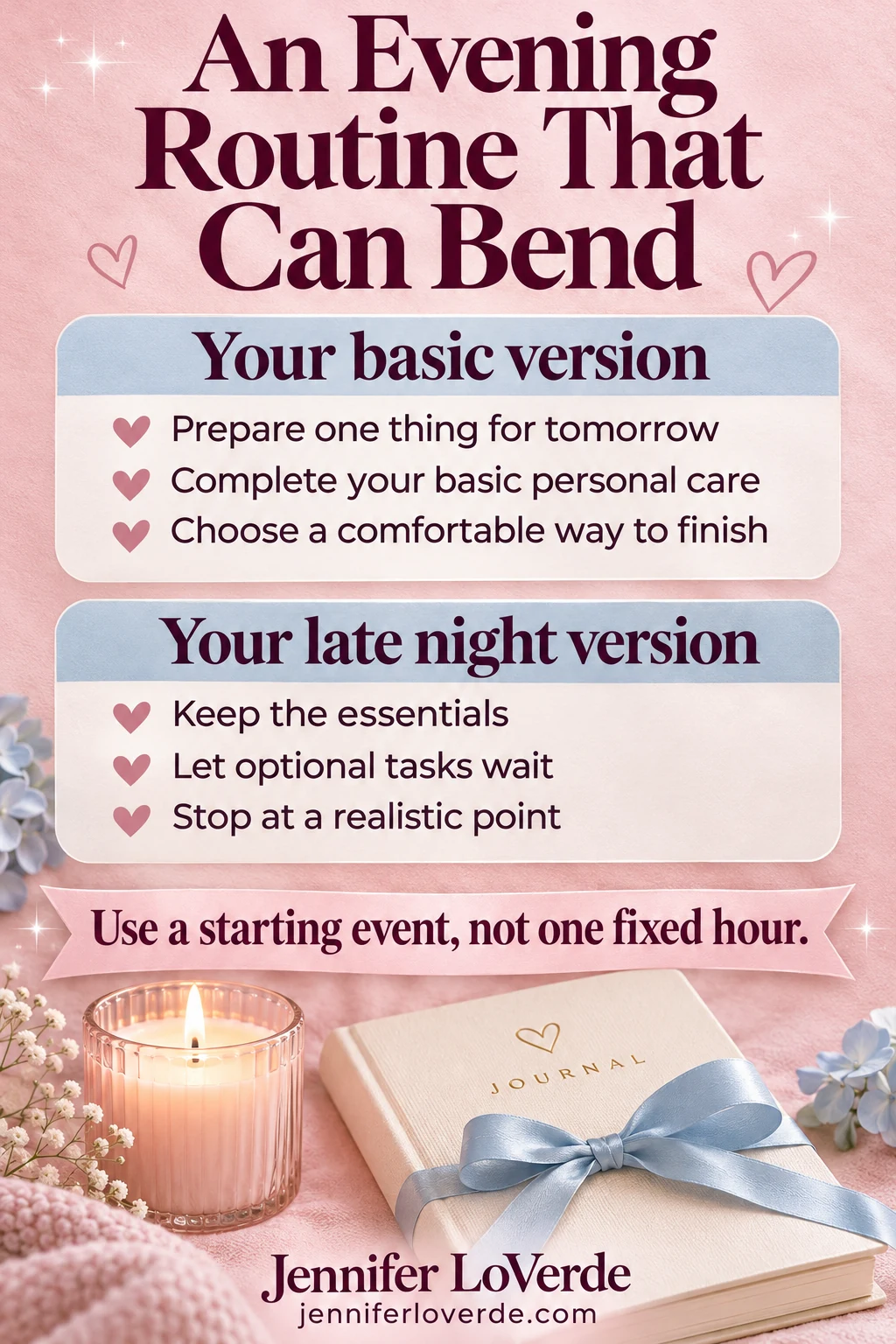
Try beginning with three parts: prepare one thing for tomorrow, complete the basic personal care you need, and choose a comfortable way to finish your available time. Adapt each part to your responsibilities.
Preparing for tomorrow might mean putting your keys in their usual place or packing the items you need for an appointment. Choose the task that removes the most obvious friction.
Basic care might include washing up or changing into comfortable clothes. Keep any personal health instructions you already follow in mind when deciding what belongs here.
The final part might be reading, listening to music, or sitting down without another household project. It does not have to be a special activity to be worth making room for.
Decide what counts as finished. Without an ending, a helpful evening routine can quietly become a growing list of everything you could possibly do before bed.
Create a smaller version for late nights
Think about the nights when you get home later than expected or have very little energy. What is the smallest useful version of your sequence that still meets your essential needs?
For example, you might put your keys and bag in place, do necessary personal care, and leave optional tidying for another time. The smaller version should be something you can recognize without making a new plan each night.
A shorter evening routine can be an intentional choice you made in advance.
You do not need to compensate for using it by doubling the next evening’s tasks. Return to the version that fits the next day’s circumstances.
Keep essential responsibilities separate from optional additions. A flexible plan should help you decide what can wait while still making space for things that genuinely need attention.
If you are sharing responsibilities with someone else, discuss the practical changes. A routine is easier to use when the people involved understand what is happening.
Keep the useful items easy to reach
Look at the setup for each step. If you need to search for a notebook, move several bags, or locate a charger every evening, the routine includes more work than the list suggests.
Give frequently used items a convenient place where possible. A bag near the door or a book beside your usual seat can remove a small decision from an already full evening.
Use what you own before buying organizers or supplies. You may only need to move an item closer to where you use it.
A written checklist can help if you regularly forget the sequence. Keep it brief enough to glance at rather than turning it into another page you need to manage.
After a few evenings, notice which step feels awkward. Adjust the environment or order before deciding that you need to be stricter with yourself.
How much time should my routine take?
Let the length reflect your needs and available time. There is no required duration that makes an evening routine legitimate.
A short sequence may fit a work night, while a longer evening gives you room for optional activities. You can have both without needing to choose one version forever.
Try your basic sequence once and notice how long the actions actually take. Include preparation and cleanup so you are planning around the real task rather than an ideal estimate.
If it regularly pushes your evening later than you intended, remove an optional step or move preparation earlier. The plan should support your available rest rather than compete with it.
The National Institute of Mental Health’s self care guidance includes prioritizing sleep and making room for relaxing activities. An evening routine is a planning tool, and it does not guarantee better sleep or replace care for an ongoing sleep problem.
Review the routine after a varied week
Try it across the kinds of evenings you actually have. One quiet Sunday cannot tell you how a plan will work after a late shift or an unexpected appointment.
Ask which actions helped, which were often skipped, and whether your starting event was useful. Skipped steps can show that the sequence needs changing rather than proving that the entire idea failed.
Keep the parts that solved a real problem. Remove or simplify the additions that made the evening feel crowded.
If your main difficulty is making space for care in a busy day, read how to make time for self care when you are busy for ideas that go beyond the evening.
Write your two versions today
Write a basic evening sequence and a smaller late night version. Under each one, note the event that will remind you to begin and the point where you will stop.
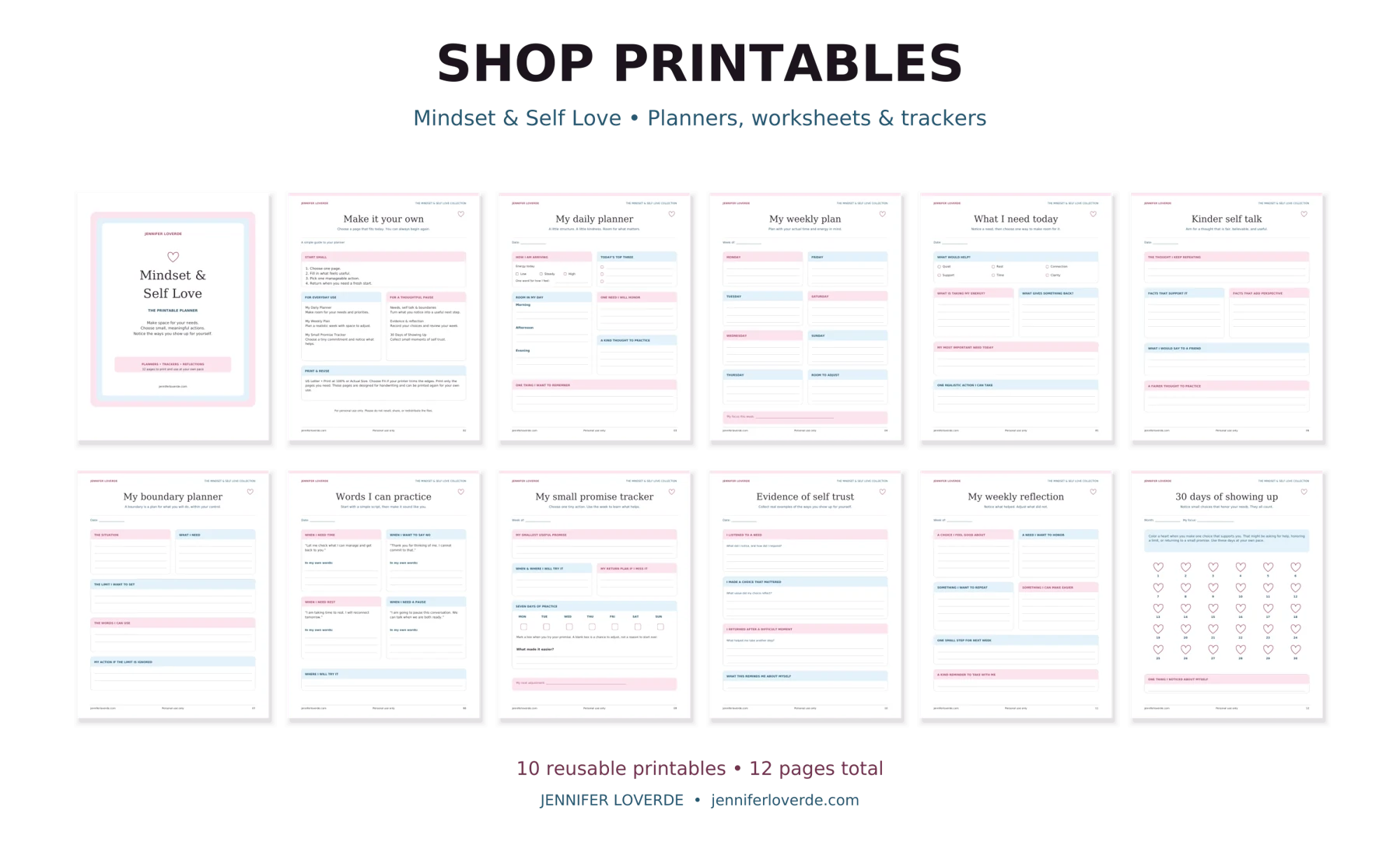
If you would like a page to organize those choices, explore the Self Care & Routines Printable Bundle. Use the printable as a place to plan and adjust, without feeling that every line needs an activity.
A useful evening routine leaves room for the life you already have.
Begin with what would help tonight, then let experience show you what belongs in your next version.

Leave a Reply