

You can say no without overexplaining by giving a clear answer, adding one brief reason if you want to, and allowing the other person to have their own reaction. You do not need to turn every declined invitation or request into a detailed defense of your time.
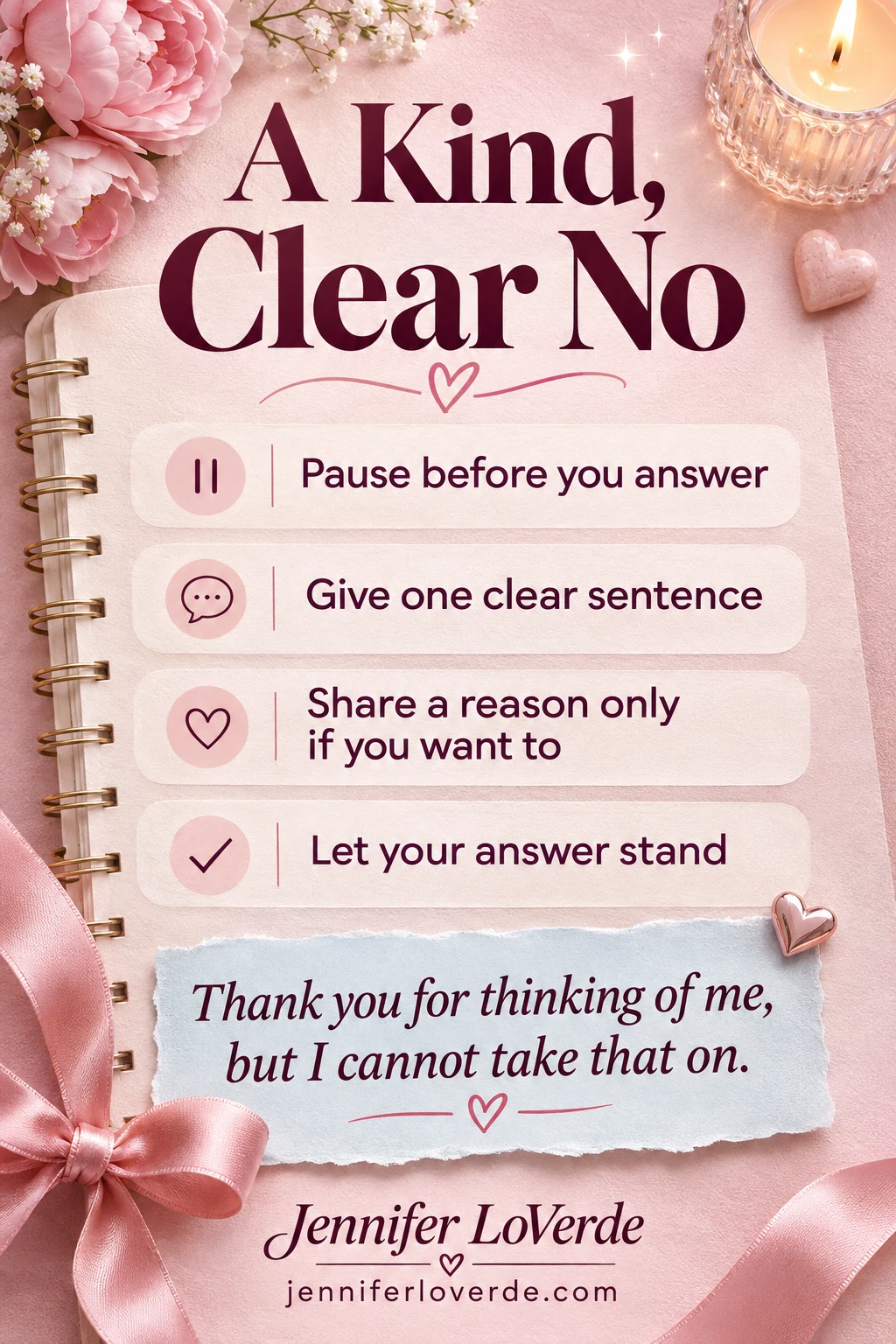
Try this starting point: “Thank you for thinking of me, but I cannot take that on.”
That sentence can feel surprisingly uncomfortable when you are used to explaining everything. You might want to list your schedule, prove how tired you are, or offer several other ways you can help before the person has even replied.
A shorter answer takes practice. The goal is to communicate honestly and kindly while giving your own needs a place in the conversation.
Why do I keep explaining my no?
Sometimes you are sharing useful context. Other times, you are hoping that enough detail will prevent disappointment, make you seem more caring, or convince someone that your reason is good enough.
Notice what you are waiting for after you give an explanation. Are you making sure the person understands a practical detail, or are you looking for permission to keep your decision?
For example, explaining that you cannot drive someone because your car is being repaired helps them make another plan. Sending a long account of every task on your list because you do not want to attend a casual gathering may add pressure without adding useful information.
A reason can explain your decision without becoming an invitation to negotiate it.
You can care about the relationship and still choose an answer that reflects what you can actually offer.
Pause before you answer
If your usual response is an immediate yes followed by regret, begin by giving yourself time. You can say, “Let me check what I can manage and get back to you this afternoon.”
Choose a reply time you can keep. A pause is most helpful when it leads to an honest answer rather than leaving the request hanging indefinitely.
During that pause, ask three questions. Do I want to do this, do I have the capacity, and have I already made a commitment that affects my answer?
A free space on your calendar does not automatically settle those questions. You might need that time for rest, family, an appointment, or something you have chosen for yourself.
If you previously agreed to a responsibility, consider what notice or coordination is needed before changing it. A boundary works best alongside clear communication about existing commitments.
Use a short answer that fits the request
For an invitation, try, “Thank you for inviting me. I am going to sit this one out.” That acknowledges the kindness without requiring a personal explanation.
For an extra task, try, “I cannot add that to my schedule this week.” If you can offer a specific alternative without overextending yourself, add it after the no.
For a request for personal information, try, “I would rather keep that private.” You do not need to reveal something else to justify keeping that detail to yourself.
At work, the conversation may involve priorities rather than a simple refusal. “I can finish this or the report by Friday. Which should come first?” makes the capacity issue visible and invites a practical decision.
Choose words you can say naturally instead of memorizing a speech that sounds unlike you.
A warm tone and a clear sentence often do more than a long explanation filled with apologies.
What if they ask why?
You can decide how much information to share based on the relationship and the request. A close friend making a genuine effort to understand is different from someone repeatedly challenging your answer.
If you want to give a reason, keep it truthful and proportionate. “I need a quiet evening” or “That does not fit my budget” may be enough.
Avoid inventing an excuse you will need to maintain later. It can be easier to practice a brief honest answer than to keep track of a story created to make your no seem more acceptable.
If someone offers a solution to your reason, return to the decision. “I appreciate the suggestion. I am still going to pass this time.”
You do not have to introduce another explanation every time the previous one gets questioned. Repeating a calm answer can help keep the conversation from turning into a debate.
Let an awkward pause stay a pause
After you say no, you may feel an urge to fill the silence. That is often the moment when a simple answer grows into a paragraph of qualifications.
Try stopping after your sentence. Let the other person respond before deciding whether more information is needed.
They may simply say okay. They may also feel disappointed, and that feeling does not automatically mean you handled the conversation badly.
Ask yourself whether you were clear, respectful, and honest. Those are useful things to review; trying to control every reaction gives you a much harder job.
If you notice yourself reopening the conversation only to receive reassurance, give yourself a little time first. You can feel uncomfortable and still let a reasonable decision stand.
Offer an alternative only when you mean it
An alternative can be thoughtful when it is something you actually want and can manage. “I cannot come Saturday, but I would enjoy coffee next week” gives a friend another way to connect.
Before making that offer, check whether it feels realistic. If you are proposing it only because you feel guilty, you may be creating another obligation you will want to escape later.
You can decline without immediately replacing the request. You can also offer something smaller, such as sharing a resource instead of taking on an entire project.
Be specific when you do offer help. “I can look at one page tonight” sets a clearer expectation than “I will try to help somehow.”
Practice with an ordinary situation
Begin with a small decision where the consequences are manageable. You might decline an optional outing, choose a different appointment time, or say that you do not want an extra item at checkout.
Afterward, write down the sentence you used and what actually happened. Compare that with the outcome you were worried about before the conversation.
This gives you something concrete to learn from. You may discover that your answer was accepted quickly, or that you want to make the next one clearer.
If you tend to put everyone else first, you may also find this guide to starting to put yourself first helpful.
A small step for today
Choose one sentence you want to practice: “I cannot take that on,” “That does not work for me,” or “I need some time before I answer.” Keep it somewhere you can see before replying to requests.
You can be considerate without making every decision sound like an apology.
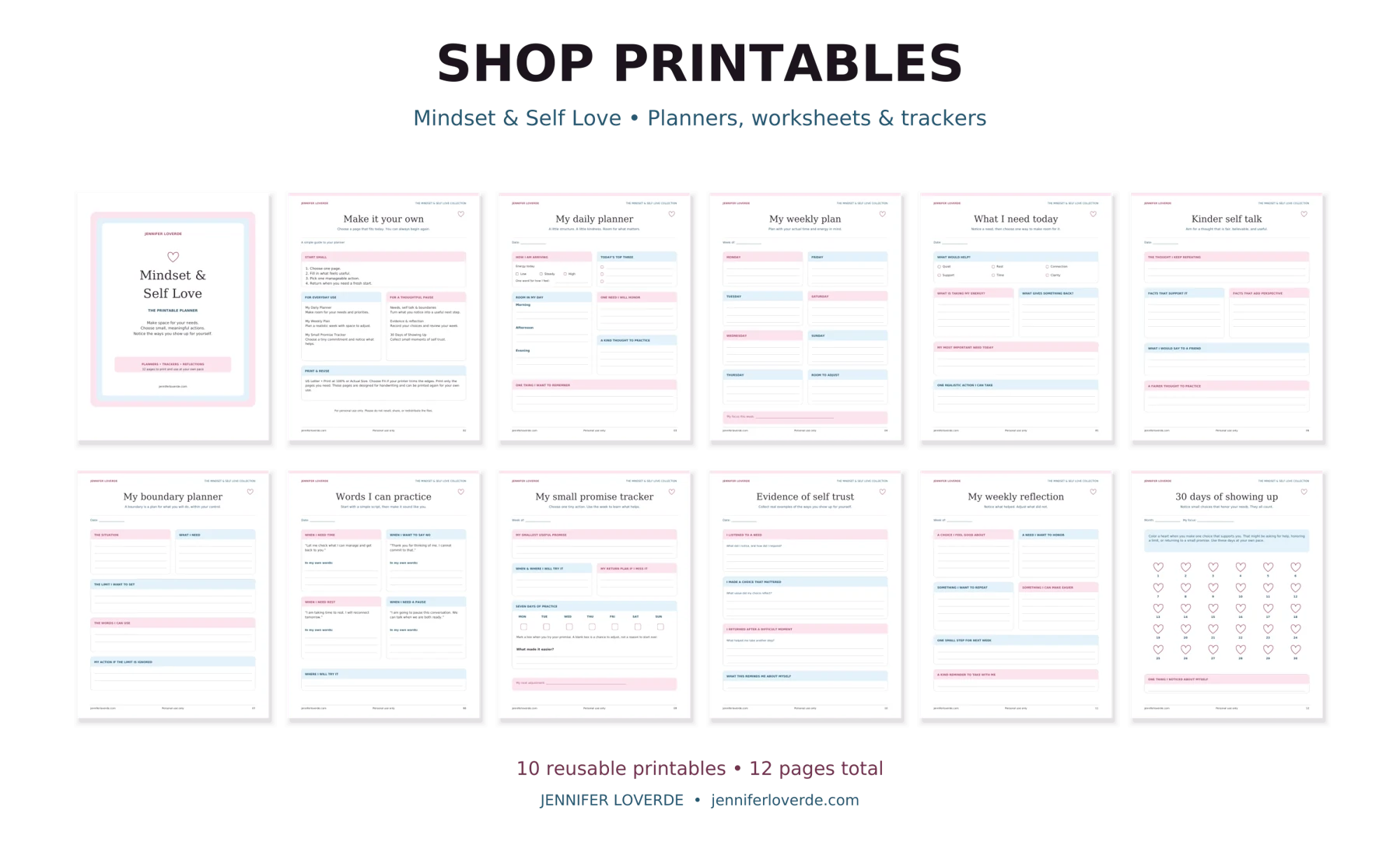
If you would like a place to reflect on your needs and boundaries, explore the Mindset & Self Love Printable Bundle. Use the pages as optional writing support while you practice making space for yourself.
You can return to this practice whenever a new situation comes up. Learning to answer clearly is something you can keep adjusting as your responsibilities and relationships change.

Leave a Reply