
If you are unsure how many habits to start at once, begin with one new habit that matters to you and fits your current life. Add another when you have had enough practice to understand what the first one requires.
One habit is a useful starting experiment, not a rule that everyone must follow.
There is no universal number that guarantees success. A person adding a brief reading habit has a different task from someone changing several complicated parts of their day.
The most helpful question is whether you can repeat the actions you choose with the time, attention, and resources you actually have. Here is how to decide without turning your next fresh start into an exhausting list.
Count the work involved, not just the habits
Two goals can look equally small on paper while requiring very different amounts of effort. Reading one page from a book beside your chair has fewer moving parts than cooking a new recipe every night.
Think about preparation, travel, decisions, cleanup, and any equipment you need. Those steps are part of the habit even if they do not appear in the title of your goal.
For each habit you are considering, describe exactly what you would do. “Be more organized” is difficult to evaluate, while “put tomorrow’s appointment in my calendar after I receive it” is concrete.
A manageable habit has an action you can recognize and an opportunity you can realistically use.
If you cannot picture where it would happen in an ordinary week, make the plan clearer before adding more habits around it.
Choose the habit with the clearest reason
Write down the changes you are interested in, then ask what each one would help you do. Look for the goal that matters in your actual day rather than the one that looks most impressive online.
You might want to read because you miss having a quiet activity of your own. You might want to record spending because you keep forgetting small purchases.
A reason does not have to be dramatic. It simply needs to help you understand why this action deserves some of your limited attention.
If several goals matter equally, choose the one with the easiest available starting point. Completing a small experiment can teach you more than spending another week designing a complete transformation.
Keep the other ideas on a later list. Setting them aside for now gives you a place to return to without making them obligations today.
Make the first version smaller than your ideal
Your ideal version might be reading a chapter, practicing a language for half an hour, or walking a long route. The version you begin with can be much smaller.
For reading, choose one page. For language practice, choose one short exercise. For a household habit, choose one specific object to put away.
This is a way to make the action easier to repeat while you learn where it fits. You can do more when you want to, but decide in advance what counts as completing your basic plan.
For example, if your basic plan is one page, reading one page counts even when you could have read ten. Changing the requirement every day makes it harder to see whether your original plan is workable.
Give yourself a clear minimum so you can practice without renegotiating the whole goal.
If the minimum still feels difficult to begin, look at the setup before assuming you need more determination.
Give the action a dependable place
Choose a situation that already happens and can reasonably remind you of the action. “After I put my lunch bag down, I will place my book on the table” is more specific than “I will remember later.”
Research on habits emphasizes repetition in a recurring context. The UCL Healthy Habits for Life guide explains this approach in everyday terms.
The exact reminder should match your life. A clock time can work for a predictable schedule, while an event such as finishing lunch may work better when your hours change.
Try to choose a reminder that leads naturally into the action. Placing a book near your usual seat may be more useful than relying on a notification you regularly dismiss.
If the chosen situation rarely happens, change it. A plan needs an available opportunity, not just a phrase that sounds organized.
How do I know when to add another habit?
Look for evidence that you understand the first habit’s demands. Can you usually identify when to do it, get what you need, and finish the basic version without reorganizing your day?
Also notice whether the habit is useful. Repeating something regularly is less meaningful if you have discovered that it does not support the goal you care about.
There is no requirement to wait a particular number of days. A calendar milestone alone cannot tell you whether a habit feels manageable or how much additional capacity you have.
You might decide to keep one habit as your focus for longer. You might also find that a second very small action fits comfortably beside it.
Before adding that action, check what is happening elsewhere in your life. A busy work period, an illness, or extra caregiving responsibilities can change what is realistic this week.
What if I already have a long habit list?
Read through the list and separate existing responsibilities from optional new goals. You still need to meet real commitments, but you may be able to reduce how many additional changes you are trying to make.
Choose one optional goal to focus on and place the others on your later list. You are allowed to pause a personal experiment without declaring the whole project a failure.
For the habit you keep, simplify its definition. “Read something” may become “read one page after lunch,” which is easier to observe and review.
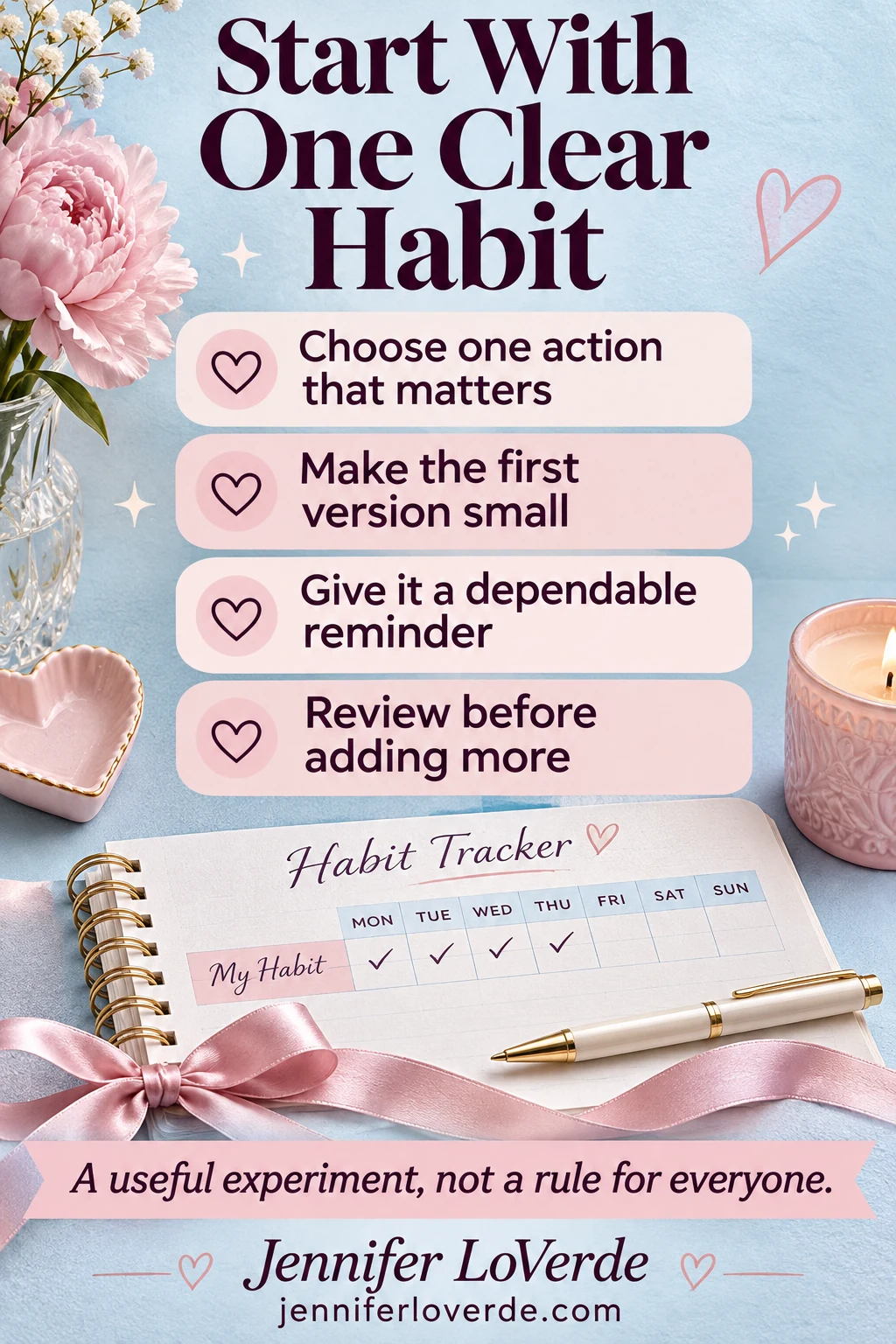
If your tracker has ten boxes but only one currently matters, use one box. A page should help you pay attention to your life rather than create extra tasks to fill its space.
Your tracker can reflect your priorities instead of deciding them for you.
You can return to a larger list when you want to and when the additions have a clear purpose.
Track information that helps you adjust
A simple mark can show whether you completed your chosen action. A brief note beside it can help you understand why the plan worked or where it became difficult.
For example, “book was already beside chair” points to a helpful setup. “Got home late and forgot” suggests that the reminder or basic version may need changing.
Review those notes before increasing the goal. You may discover that you need a different opportunity rather than another habit or a more demanding target.
Avoid treating every empty box as a verdict about your character. If missing one day tends to make you abandon the whole plan, read why missing a day can lead to giving up for a separate approach to restarting.
Start with one clear experiment
Choose one action, one reminder, and one basic version you can repeat. Give yourself a chance to learn from that combination before expanding your plan.
You can ask, “Did this fit my week, what made it easier, and what do I want to adjust?” Those questions give you a practical next step without requiring a perfect record.
If you want a simple place to record the experiment, the Habits & Consistency Habit Tracker Bundle provides printable tracking pages. Choose a page that suits the habit you are practicing and leave any extra spaces unused.
You do not have to improve every area of your life at the same time to make a change that matters.
The next habit can wait until you have a reason and enough room to welcome it.

Leave a Reply