

You can enjoy spending time with people and still feel tired afterward. Conversation, travel, noise, a busy setting, and the effort of paying attention can all make an outing demanding, especially when it follows an already full day.
Enjoyment and tiredness can exist at the same time.
Feeling drained after one event does not, by itself, tell you that you dislike people, have a particular personality type, or need a medical explanation. Start by noticing the circumstances and giving yourself room to recover.
If the exhaustion is new, persistent, unusually severe, or affecting your everyday life, discuss it with a health professional. A blog post cannot determine the cause of ongoing fatigue.
Look at the whole day around the event
An evening with friends may come after work, errands, a commute, and several conversations you have already had. It can be easy to judge your energy only by the final activity.
Think about what happened before you arrived. Did you have time to eat, take a break, and get ready without rushing, or were you moving straight from one obligation into another?
Also consider the practical effort involved in getting home. A late drive or a long trip can make an enjoyable visit feel more tiring by the time the evening ends.
This does not mean you need to calculate every minute of your day. You are looking for a fuller picture before deciding that the gathering itself was the problem.
Ask what the outing required from you, along with whether you enjoyed it.
Those are separate questions, and both answers can help you plan the next invitation.
Notice which settings feel more demanding
A crowded restaurant, a large celebration, and a quiet conversation with one friend are different experiences. They do not need to have the same effect on your energy.
For a few outings, make a brief note of the setting, how long you stayed, and how you felt afterward. Include anything obvious, such as a noisy room or arriving after a demanding shift.
Keep the notes descriptive. “Three hours in a loud room after work” gives you something to adjust, while “I am terrible at being social” turns an observation into a judgment.
You may discover that shorter visits feel better or that you prefer meeting earlier. You may also notice that the setting matters more than the person you are spending time with.
Try changing one part of the plan before giving up on an activity you value. A quieter café or a walk with a friend may offer the connection you want with fewer demands.
Check whether you were working hard to seem okay
Sometimes the tiring part is monitoring yourself throughout the conversation. You may be checking every word, trying to keep everyone entertained, or feeling responsible for every quiet moment.
Notice whether you were able to participate comfortably or whether you felt that you had to perform the whole time. You do not need to assign a label to that experience to recognize that it takes effort.
One practical experiment is to let someone else carry a little more of the conversation. You can listen without preparing the perfect next question or filling every pause.
Another is to choose company where you can be honest about your limits. “I am happy to see you, and I am a little tired today” gives context without requiring you to pretend otherwise.
If worry about social situations repeatedly limits your life or causes significant distress, professional support may be useful. You do not have to figure out that pattern entirely through trial and error.
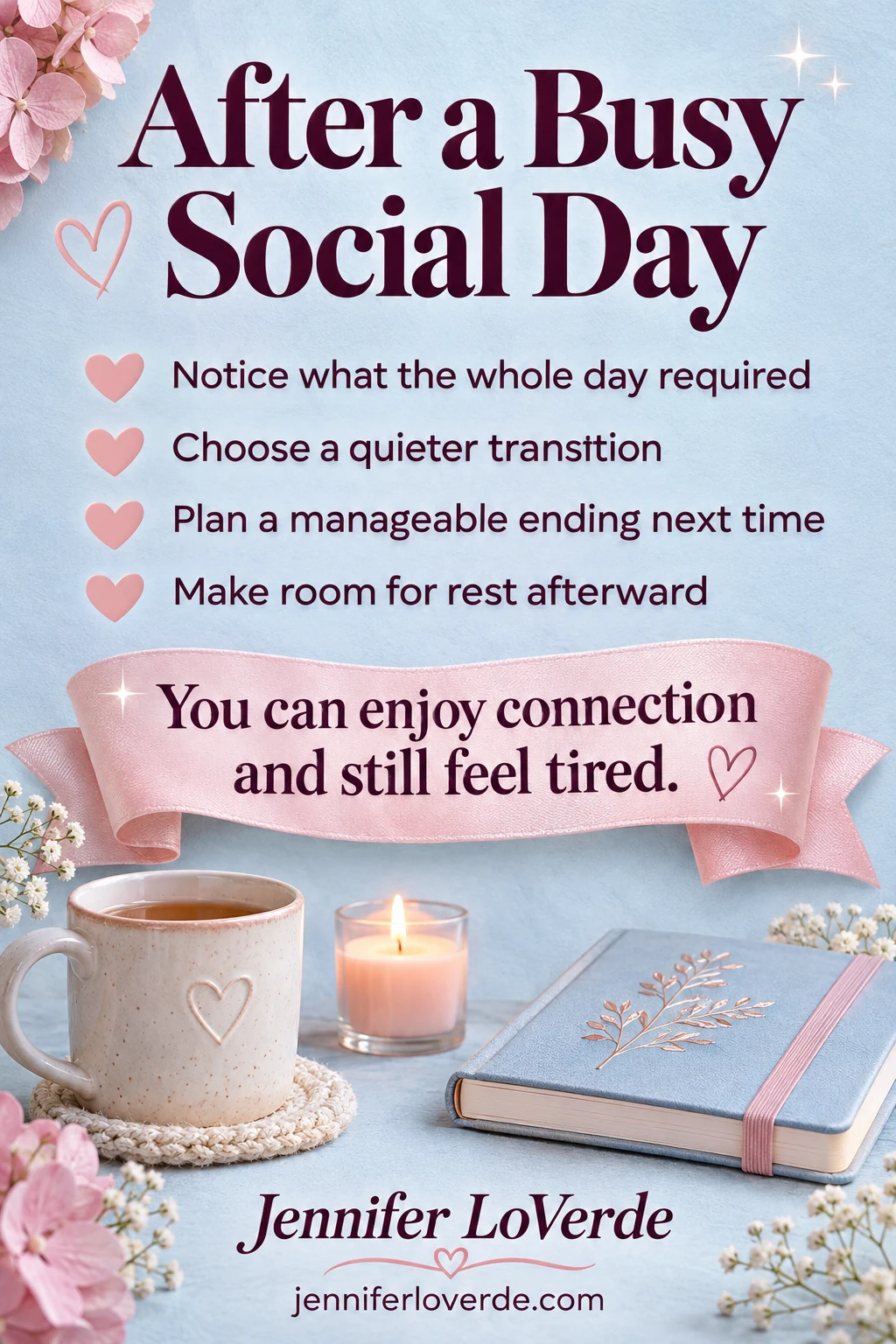
Give yourself a small transition afterward
Instead of going straight from a busy outing into more messages, chores, or scrolling, try leaving a little room to settle back in. Choose something ordinary that you find comfortable.
You might change into comfortable clothes, have water, or sit in a quieter room for a few minutes. You might prefer a familiar song or some time without another conversation.
There is no special sequence you need to complete. Pick one or two things that make arriving home feel less rushed.
The National Institute of Mental Health’s self care guidance includes making time for enjoyable, relaxing activities and paying attention to basic needs. Your transition can be simple and personal.
A quiet pause can be part of your evening without becoming another project to do correctly.
If a particular practice makes you more uncomfortable, skip it. You can choose another way to spend the time.
Plan an ending before you arrive
An outing can become more demanding when you stay far beyond the point you intended. Deciding on a rough departure time beforehand can make the choice easier later.
You might tell your friend, “I can stay for about an hour, and I am looking forward to seeing you.” That keeps the invitation warm while making your availability clear.
If you want to stay longer once you are there, you can decide then. Having a plan simply gives you an option besides waiting until you feel completely depleted.
Consider practical details, too. Your own transportation or a clear pickup arrangement may make it easier to leave when you need to.
When someone asks you to stay, a brief answer can be enough: “I had a lovely time, and I am heading home now.” You can appreciate the visit without extending it indefinitely.
Avoid turning recovery into self criticism
After you get home, you may start comparing yourself with people who seemed ready to keep going. Their plans and energy do not tell you what your own evening should have felt like.
Try describing the experience with a sentence that leaves room for both parts. “I enjoyed seeing my friend, and I need a quiet night afterward” is a useful place to begin.
You do not have to decide that the outing was a mistake just because you are tired. You can value the connection and adjust the length or timing next time.
If you often feel guilty taking a break, this post about feeling guilty when you rest explores that separate concern.
When should I look for more support?
Occasional tiredness after a full day is different from fatigue that keeps happening without a clear pattern or does not improve with ordinary rest. Pay attention to changes in your usual functioning.
Consider contacting a health professional if the tiredness is persistent, worsening, or interfering with work, relationships, or daily responsibilities. Mention any other changes you have noticed rather than assuming that socializing explains everything.
The same applies if distress about social situations is causing you to avoid connection you want. A qualified professional can help you explore possible causes and support options.
Make your next plan a little easier
Choose one adjustment for the next outing: a quieter place, a shorter visit, an earlier start, or less rushing beforehand. Afterward, notice whether that made the experience more manageable.
You can use the Stress & Finding Calm Printable Bundle as an optional place to write down what felt demanding and what helped. The pages are reflection tools and do not diagnose or treat fatigue or anxiety.
You are allowed to enjoy connection and make room for rest afterward.
Let what you learn guide the next plan, rather than expecting every social experience to require the same amount of energy.


Leave a Reply